



Slatted frame 80x200 cm – ideal for a single bed or a 160x200 cm double bed
An 80×200 cm slatted frame provides ideal support for mattresses measuring 80 cm wide and 200 cm long. It stabilises the mattress, improves airflow, and promotes ergonomic body alignment. It is suitable for narrower 80×200 cm single beds or, when used as a pair, for standard 160×200 cm double beds.
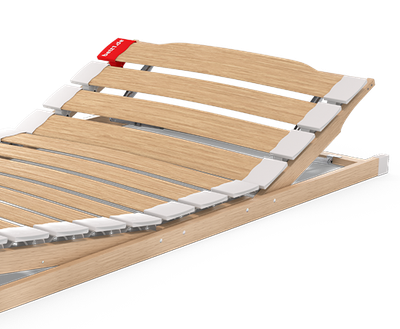
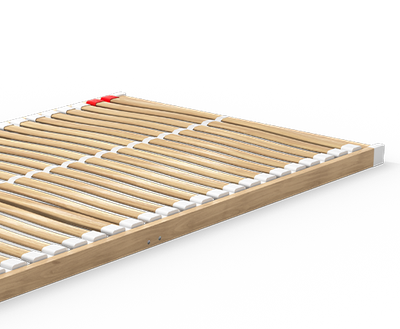
Why an 80×200 cm slatted frame is the right choice
Your slatted frame performs several important functions:
- Support and cushioning: The evenly arranged wooden slats of your 80×200 cm slatted frame reliably support your mattress and provide noticeable flexibility.
- Mattress ventilation: Your mattress needs airflow to prevent mold from forming. A slatted frame allows your mattress to breathe from below. The gaps between the slats let air circulate through the mattress and carry away moisture. – By the way, you should also air out the top of your mattress. After getting up, simply leave your mattress uncovered for a while and, if at all, make your bed later.
- Promotes durability: Even weight distribution and pressure regulation help your mattress retain its shape for longer and prevent sagging.
- For narrow single or double beds: A slatted frame measuring 80×200 cm is ideal for a narrow 80×200 cm single bed or a 160×200 cm double bed.
Buying an 80×200 cm slatted frame – what to look out for
Type of Wood
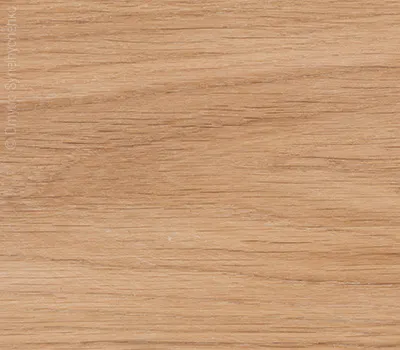
Choose beech wood if possible. It is significantly more elastic and durable than the cheaper birch wood, which tends to sag more quickly.
Surface
Make sure the surface is smooth—ideally lacquered—so that no wood splinters can damage the mattress cover, which would be particularly frustrating with a reversible mattress.
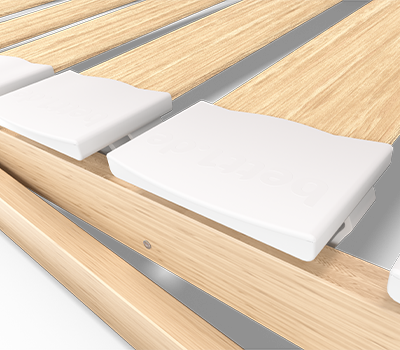
Slat Caps
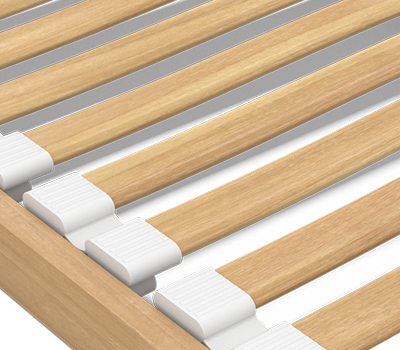
The slats should be mounted in flexible rubber caps. It is important that the slats extend beyond the side rail so the slatted frame provides well-sprung support from the center all the way to the edges.
Design and ergonomics
- Slat spacing: A maximum gap of 3 cm between slats ensures reliable support while still allowing the mattress to give where needed. If the gaps are too wide, the mattress can squeeze through the slats and suffer long-term damage.
- Center strap: A vertical center strap connecting all slats distributes weight evenly and helps prevent individual slats from breaking or shifting out of place.
Compatibility
- Support rails in the bed frame: Check whether your bed frame has continuous side ledges (long support rails along the sides). For 80 cm slatted frames, corner support brackets are sometimes sufficient, but continuous side ledges provide greater stability.
- Frame height: Measure the insertion depth of your bed frame. Some slatted frame models can be up to 10 cm high — if this already fills your bed frame, the mattress may sit completely above the frame and slide around. To prevent this, the mattress should sink at least 4 cm into the bed frame.
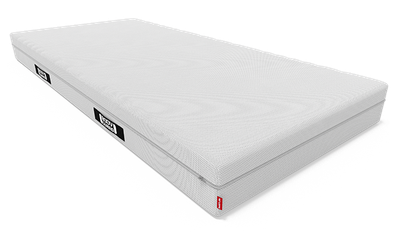
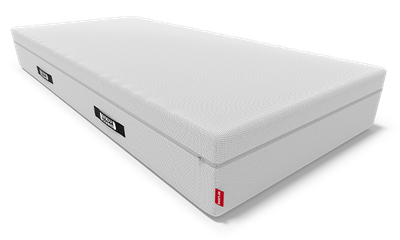
80×200 cm slatted frames: adjustable or basic
Many slatted frame models are adjustable, allowing you to tailor them to your individual needs. The firmness level can often be adjusted using sliding regulators. Some 80×200 cm slatted frames also offer height adjustment.
80×200 cm slatted frame – adjusting firmness
Many slatted frame models include firmness regulators on individual slats, for example in the back, shoulder, or lumbar zones. Be sure that the settings work well with your mattress. One advantage of a basic 80×200 cm slatted frame without further adjustment options is that it does not interfere with the ergonomics of a well-designed mattress, reducing the risk of making things worse through incorrect adjustments. The BODYGUARD® Slatted Frame Basic is precisely matched to BODYGUARD® mattresses – but can also be used with any other mattress.

Adjustable head and foot sections
Some models feature adjustable head and foot sections that can be raised to a certain angle. This lets you find a comfortable position for reading, watching TV, or simply relaxing. For sleeping, however, the slatted frame should usually remain flat. During pregnancy, or in cases of sleep apnea, reflux, or certain cardiovascular conditions, a different sleeping position may be beneficial – but that's something you should discuss with your healthcare professional.
80×200 cm electrically adjustable slatted frame
If you don’t want to miss out on extra comfort, an electrically adjustable slatted frame could be a good option. It allows you to switch quickly and easily between different sleeping or resting positions – any time, at the touch of a button. A versatile alternative to an electrically adjustable 80×200 cm slatted frame is HULK®, the electric control unit for your BODYGUARD® mattress.
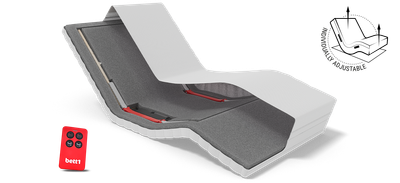
What types of 80×200 cm slatted frames are there?
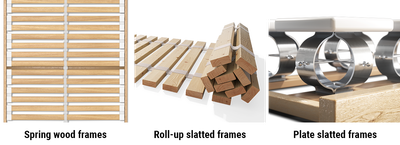
Not all slatted frames are the same. Different designs are suited to different mattresses and sleeping preferences. In general, there are three main types of slatted frames: sprung slatted frames, roll-up slatted frames, and disc slatted frames.
Sprung slatted frame 80×200 cm
Most 80×200 cm slatted frames available today are so-called sprung slatted frames. Their slats are made from elastic, springy laminated wood. These are mounted to the frame using rubber suspension elements – known as slat caps – so the slats can flex and provide cushioning support.
Roll-up slatted frame 80×200 cm
A roll-up slatted frame consists of simple wooden slats arranged side by side that can be rolled up compactly. Unlike a classic slatted frame, it does not have a surrounding stabilizing frame. Its advantages are a low price, minimal storage space, and easy handling. Because of its simple design and flexibility, it is mainly suitable for temporary solutions or guest beds that are only used occasionally and then stored away again. High levels of sleeping comfort or individual adjustment options are generally not to be expected from a roll-up slatted frame. In addition, you will need a bed frame with continuous side ledges – otherwise the slatted frame and mattress could slip through.
Disc slatted frame 80×200 cm
Strictly speaking, a disc slatted frame is not a slatted frame in the traditional sense. Instead of wooden slats, it uses numerous disc-shaped elements made of plastic, rubber, or metal. These discs can move in all directions and can often be adjusted individually, which is intended to provide targeted support for sensitive areas of the body. However, this only works when adjusted correctly. Due to the system’s high complexity, there is a significant risk of incorrect setup by inexperienced users.
Types of slatted frames at a glance
| Sprung slatted frame | Disc slatted frame | Roll-up slatted frame |
|---|---|---|
|
|
|
80×200 cm bed frame without a slatted frame
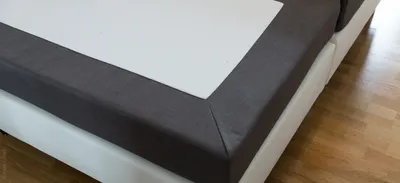
Some 80×200 cm bed frames do not require a slatted frame – for example box spring beds. If you already have an 80×200 cm slatted frame you would like to reuse, you can simply choose an 80×200 cm bed frame without a slatted frame. However, a classic 80×200 cm bed frame cannot be used without a slatted frame.
That depends entirely on your needs. What matters most is that the slatted frame does not negatively affect the ergonomic properties of your high-quality mattress. We recommend a sturdy sprung slatted frame made from elastic hardwood such as beech, with cleanly finished slats (spacing max. 3 cm) and flexible rubber mounts. With this setup, you can hardly go wrong.
Common sizes include 80×200, 90×200, 100×200, 120×200, and 140×200 cm. For beds measuring 160×200 or 180×200 cm, it is usually best to combine two 80 cm slatted frames or two 90 cm slatted frames, respectively.
In classic bed frames: yes. Without a slatted frame, both stability and ventilation are missing. Only box spring beds do not require a separate slatted frame. If you want to skip a conventional bed frame entirely, you should still ensure ventilation underneath the mattress – for example with a DIY slatted frame made from pallets. Otherwise, there is a risk of mold.
The mattress has the greater influence on sleeping comfort. The slatted frame should support its ergonomic properties – not alter them. Invest in a high-quality mattress first and choose the slatted frame to match.


