



Cold Foam Mattress
Cold foam mattresses belong to the family of foam mattresses. Cold foam mattresses are particularly popular due to their exceptionally high adaptability, durability and thermal insulation. Furthermore, cold foam mattresses are considered hypoallergenic; they absorb night-time perspiration well and allow it to evaporate quickly.
Who is the Cold Foam Mattress Suitable for?
If cold foam is used in a mattress, the resulting cold foam mattress can offer you a whole range of benefits. The advantages of a cold foam mattress make it particularly appealing for a wide variety of needs. If you belong to one of the following groups, you will benefit particularly from the properties of a cold foam mattress.
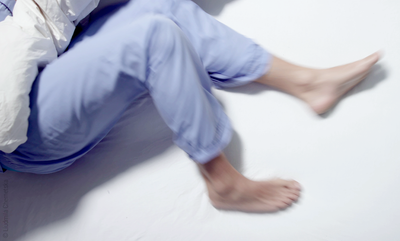
Cold foam mattresses for restless sleep
Cold foam mattresses tend to have a high level of resilience. This means that the foam springs back to its original shape as soon as you get up from where you were lying. This is the opposite of memory foam, which retains the shape you leave behind for some time whilst you’re lying on it. Especially if you’re a restless sleeper, the quick response and adaptability of a cold foam mattress are a huge advantage.
- you need less effort to turn over
→ makes it easier to drift back to sleep - you don’t slip back into any memory foam indentations
→ supports your posture - quiet foam instead of creaking or squeaking springs
→ allows you and others on the mattress to sleep peacefully
All these benefits of cold foam mattresses mean that you don’t wake up as easily, even if you move around more. When two people share a mattress, you won’t disturb each other with noisy tossing and turning or a mattress that wobbles across its surface. A cold foam mattress should mainly move where you move and not pass on the vibrations.

Cold foam mattresses for allergy sufferers
If you suffer from a house dust allergy, a cold foam mattress can offer you a number of benefits:
- Cold foam provides an unfavourable environment for house dust mites
- The rapid evaporation of open-cell foams also deprives bacteria and mites of their breeding ground
Allergies rarely occur in isolation: as well as cold foam mattresses, latex mattresses are also considered to be mite-resistant. However, if you are sensitive to latex as well as house dust, a natural rubber mattress is not the best choice. If you have a severe house dust allergy, you should also use allergy-friendly encasings – that is, allergen-proof protective covers for your mattress.
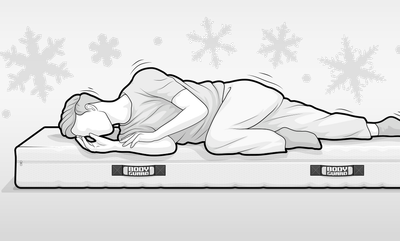
Cold foam mattress for people who feel the cold easily
Foams were originally materials used primarily for thermal insulation. It therefore stands to reason that cold foams have low thermal conductivity. The climatic conditions in Germany, where there are more cool months than warm ones, certainly contribute to the popularity of the slightly warming cold foam mattress.
- People who feel the cold easily benefit enormously from the heat-insulating cold foam mattress
- If you suffer from poor circulation, use an additional electric blanket
- Those who tend to sweat heavily may find spring mattresses more comfortable
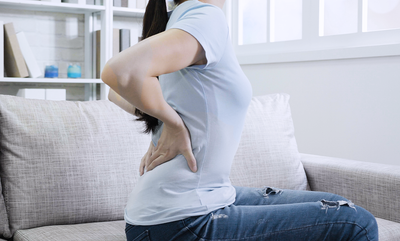
Cold foam mattress for people with back pain
Modern cold foam, such as QXSchaum®, offers high point elasticity. This means that your cold foam mattress responds precisely at the points where pressure is applied.
- Heavier parts of the body, such as the hips and shoulders, can sink in optimally
- Lighter parts of the body are better supported
- Targeted sink-in and support characteristics ensure your spine is optimally supported in every sleeping position
- Cold foam mattresses are comparatively lightweight and therefore easier to turn and transport
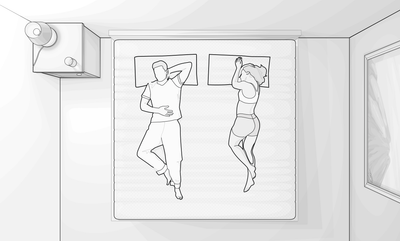
For Back and Side Sleepers
Depending on whether you sleep on your side or on your back, the pressure on your mattress will vary. Both sleeping positions place completely different demands on the sink-in and support characteristics of specific areas of the body. The high point elasticity of modern, high-quality cold foam adapts superbly to these varied requirements.
Cold Foam Mattresses Adapt to Adjustable Slatted Bases
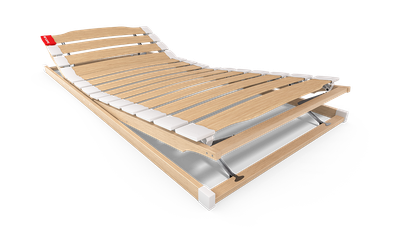
If you don’t want to do without your adjustable slatted base, you’ll need a mattress that can easily adapt to your individual settings. With a cold foam mattress, the material flexes to suit your needs and can be restored to a flat sleeping surface even after prolonged use in a curved position.
The Structure and Manufacture of Cold Foam Mattresses
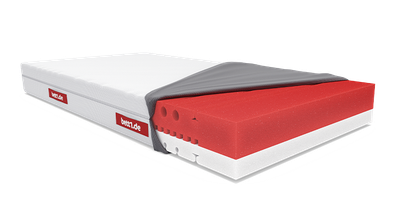
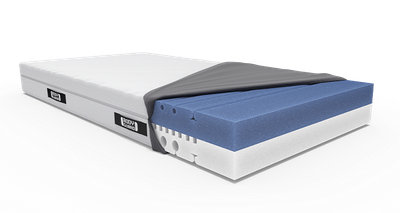
What does the inside of your cold foam mattress actually look like? How is the mattress core made, and where does the term ‘cold foam mattress’ come from? A cold foam mattress usually consists of a mattress core and a mattress cover. There are differences in the way the foams are manufactured. In the vast majority of cold foam mattresses, the mattress core is not simply a compact block of foam. You can often see cuts and recesses in various shapes within the mattress core. These are designed to optimise the way the mattress gives way in specific support zones for the corresponding parts of the body. This results in 5-zone, 7-zone or even 9-zone mattresses. In some cold foam mattresses, additional materials are woven in, bonded or inserted. Spring mattresses also usually incorporate one or two layers of foam so that you can actually lie on the mattress.
What is Cold Foam?
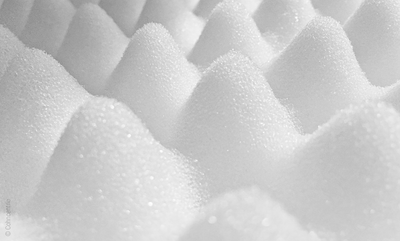
The core of a cold foam mattress is made from the components isocyanate and polyol. The name ‘cold foam’ is derived from the manufacturing process: the foam is named according to the temperatures required for it to cure. Cold foam cures at very low temperatures. In addition to cold foam, there are also so-called hot foams, i.e. foams that require heat to cure. For some hot foams, which are also used in mattresses, the manufacturing processes have now been adapted to such an extent that, strictly speaking, they too can be sold as cold foams. This includes the particularly popular polyurethane foam, which, depending on how it is treated, is also processed into various types of mattresses. Mattresses made from PU or PUR foam – that is, polyurethane – include comfort foam mattresses, moulded foam mattresses and also the QXSchaum® mattresses from bett1. PUR foams originally belong to the category of hot foams. They are foamed using blowing agents such as CO₂ or through contact with water, and then cured using heat.
Comfort Foam Mattresses
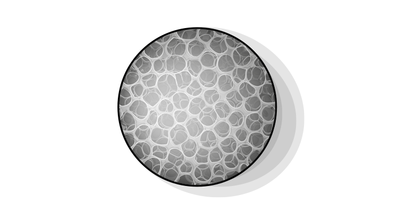
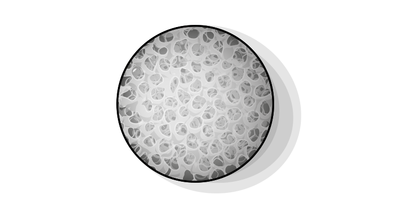
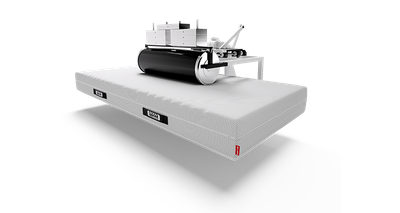
The polyurethane used in comfort foam mattresses usually results in a particularly soft foam. Unlike other cold foam mattresses, most comfort foam mattresses are not ‘crushed’. In the so-called ‘crushing’ process, the foam is compressed using a rolling mill, causing the cells to burst. Comfort foam mattresses, however, are already as open-celled as they can be immediately after manufacture.
Memory Foam Mattresses
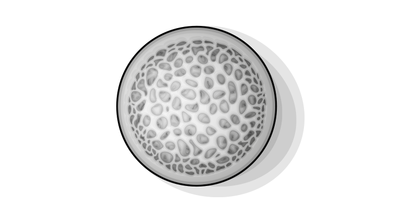
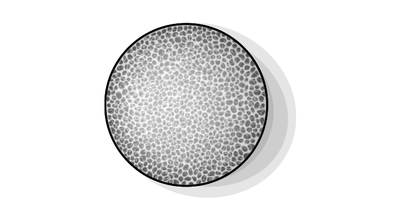
‘Visko’ comes from the Greek and means ‘viscous’. Memory foam mattresses mould precisely to the shape of your body in response to pressure and body heat. However, once compressed, the foam returns to its original shape only very slowly. Furthermore, the material offers virtually no counter-pressure. This is why you won’t find mattresses made entirely of visco foam on the market. Often, only the sleeping surface consists of a layer of visco foam, whilst underneath there are layers of other cold foams or even spring cores to provide sufficient support.
Firmness Levels of Cold Foam Mattresses
The firmness rating indicates how soft or firm your mattress is. Cold foam mattresses are available in the following firmness ratings:
- H1 – very soft
- H2 – soft
- H3 – medium firm
- H4 – firm
- H5 – very firm
The firmer the mattress core, the greater its resistance to external pressure. The right firmness level depends on various factors:

1. Personal Preferences:
Do you prefer a softer or firmer mattress? The firmness of a cold foam mattress depends primarily on what feels comfortable to you. Most people in Germany prefer to sleep on medium-firm cold foam mattresses.
2. Body Weight and Body Shape:
Some people find all mattresses comfortable, whilst others find it more difficult to choose the right one. If you base your choice of firmness solely on your body weight, you’re more likely to make the wrong decision. Your height and the distribution of your weight across the mattress play an equally crucial role. A good mattress should cater for a certain range of body types, regardless of its firmness level.

3. What Firmness Rating Does the Manufacturer’s Specification Actually Correspond to?
When assessing firmness ratings, you are effectively faced with a fundamental problem: whilst there is a standard for firmness ratings, it is not legally binding. In the manufacture of conventional cold foam, foam producers have agreed on an acceptable variation in firmness of a considerable 20 per cent – 20 per cent softer and 20 per cent firmer. Ultimately, these variations in compression firmness mean that, although you are officially buying a cold foam mattress with a firmness rating of 3, you may actually end up lying on a mattress with a firmness rating of H2 or H4.
Which Firmness Level is Right for You?
Two factors are crucial:
- Is your spine ergonomically correct when lying on your back or side? When lying on your side: your spine should be straight and parallel to the surface you are lying on. When lying on your back: your shoulders and pelvis should sink in just enough to replicate the natural double-S curve of your spine, as when standing comfortably.
- The firmness level is a personal choice! It certainly matters whether you prefer a softer or firmer feel. A high-quality cold foam mattress should provide good sink-in and support for the relevant parts of your body, regardless of the firmness level.
Are There any Disadvantages to Cold Foam Mattresses?
Whilst cold foam mattresses offer many advantages, there are also a few limitations in terms of their manufacture and use. As other types of mattress, such as gel foam or spring mattresses, often contain at least one layer of cold foam, you should consider a few factors before buying a mattress.
Increased Fire Risk
At temperatures of 400 °C or above, a cold-foam mattress poses an increased fire risk. A flame-retardant cover can help to mitigate this risk. Generally speaking, it is safer for your health and well-being not to smoke in the bedroom – regardless of the fire risk. However, candles, however romantic they may be, can also pose a real danger if they tip over onto cold foam. This is particularly true if you fall asleep before a candle or cigarette has gone out and do not notice the fire in time.
Slatted Base Required
You should always place your cold foam mattress on a suitable base to ensure optimum ventilation. A slatted base is ideal, as the support surface, which is interrupted at regular intervals, allows air to circulate sufficiently and reduces the likelihood of mould forming.
Production of One-Piece Mattresses in All Sizes
If you’re looking for a mattress for your double bed and want the same level of comfort across the entire surface, then keep your eyes peeled when buying a mattress! For widths of 160 cm and above, some manufacturers offer mattresses made from two cores glued together. Some openly sell large sizes as ‘partner mattresses’ with two different mattress cores. This only makes sense if two people sharing a bed have very different preferences when it comes to firmness. In that case, ideally, you can each choose the firmness of your own side of the bed. In most cases, the production of glued mattress cores is simply a matter of cost. For you, the bonded cores reduce lying comfort due to the bonded seam and, in the case of bespoke mattresses with different firmness levels on each side, may even result in the warranty being voided. Cold foam mattresses from bett1.de are always manufactured with continuous mattress cores. However, if you would like two cores of different firmness levels in a single cover, please feel free to contact our customer service team with this request.


